Thevenin & Norton Equivalents
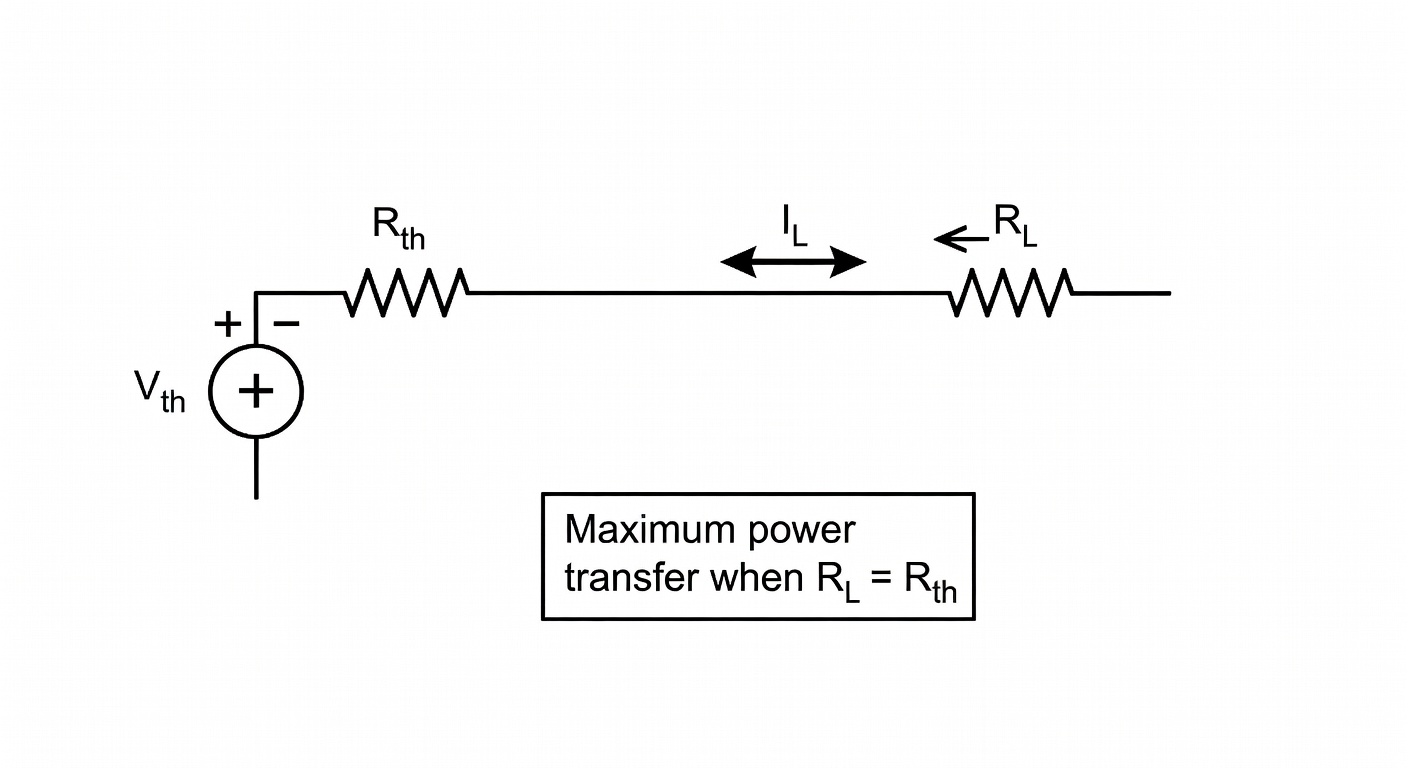
Any linear two-terminal network looks identical to a voltage source in series with a resistor (Thevenin) or a current source in parallel with a resistor (Norton). Sweep the load and feel max power transfer at Rload = Rth.
Circuit Parameters
Equivalent Values
Load Results (all three views agree)
Vload, Iload, and Pload vs Rload
Red marker: current Rload. Green marker: Rload = Rth (maximum power transfer).
Why this matters
For the simple network Vs in series with Rs, the terminals are everything to the left of Rload. With the load removed (open circuit), no current flows and Vth = Vs. Short the terminals and Isc = Vs / Rs, so Rth = Rs. Norton form is just the dual: In = Vth/Rth in parallel with Rn = Rth.
Power delivered to the load is P = Vload × Iload. It peaks when Rload = Rth — the classic maximum power transfer result. (Note: this is not the same as maximum efficiency, which favors a much larger Rload.)